March 23, 2026
Lok Sabha MP Sougata Ray’s speech on The Finance Bill, 2026
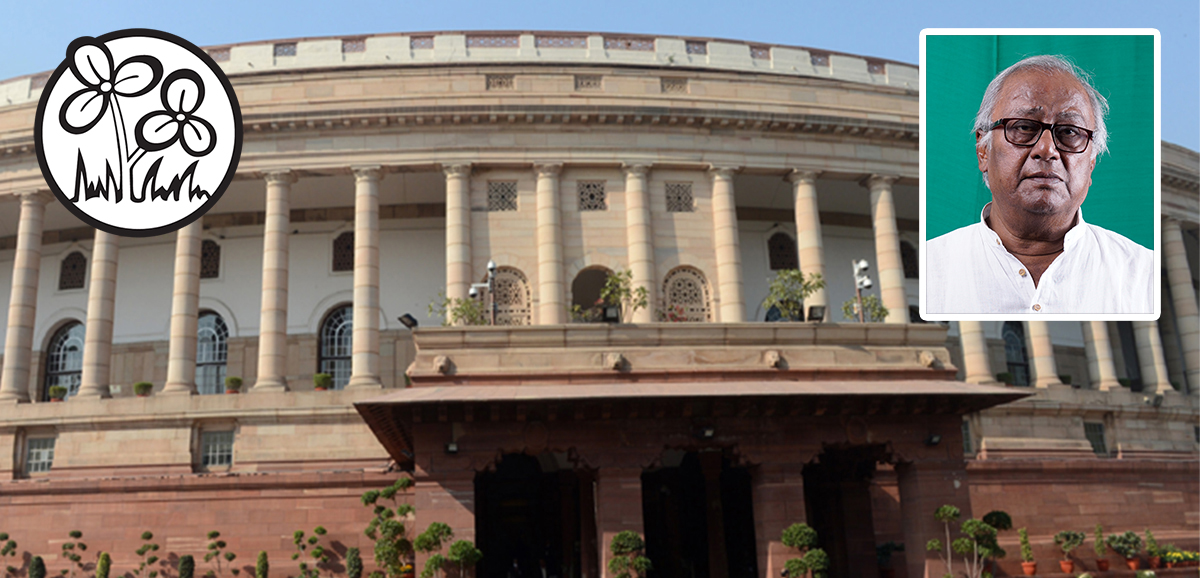
Sir, I rise to speak on the Finance Bill. This was part of the Budget which was presented by the Finance Minister on 1 st February, 2026. It is one and a half months since then. Let us see what the Budget means and what it is for. May I say that basically this Budget is a part of Atal Tinkering Lab. The Finance Minister has tinkered the budgetary movements and I will give you examples as to what she has actually done. There are no serious changes in tax structure, only tinkering. Some IT return timelines were pushed further and forms simplified. There are some changes in forms and then tax penalties. Prosecution rules have been eased. Again, the foreign firms sourcing services from Indian entities are to get 50 per cent tax safe harbour margin of costs among other benefits. Sir, now, I come to Capital Gains Tax. Exemption on sovereign gold bonds is only when held from issuance to maturity. You will notice that these are small tinkering. Also, if I say buybacks, they are to be taxed as capital gains, retail investors may benefit a little. There is a one-time disclosure tax scheme for NRIs. The main thing is, The Government’s tax gift, that is the Gift City. They are getting advantage year after year because Gift City is placed in Ahmedabad. They are getting advantages. Sir, the Government has a good proposal, one among many. It proposes to exempt award given by motor accident claims tribunal from income tax. It is a good step. Sir, there is a strange thing. The Prime Minister wants destination marriages to be held within India. But, the Finance Minister proposes to reduce TCS rates on the sale of overseas tour programme package from current five per cent and 20 per cent to two per cent. The Prime Minister wants marriages to be held in India. The Finance Minister is giving tax benefits to marriages held outside India. I do not know why this difference is there. Sir, the gross tax revenue to GDP ratio for FY 2027 is the lowest in six years. Is it a good thing? Sir, the Income Tax Department is saying that there will be new income tax law effective from April 1. It went to a Parliamentary Standing Committee, and again there is decriminalisation and compliance corruption. The Central Board of Direct Taxes say that they will decriminalise. Earlier they used to put everybody in jail, now they are saying that we are going for decriminalisation. To whom are you giving favour? It is the corporates. Sir, one economist has said: “The budget has delivered a googly – the retrospective tax. Besides being greedy and unfair, retrospective taxes should also be illegal. Nothing is gained and much is lost in terms of investor confidence via this new tax.” This will net only about Rs. 200 crore a year. There will be a new tax on capital gains made by the purchase of sovereign gold bonds. So, retrospective tax, as they say, is criminal. Now, the main thing is, in our country, taxes are like this one-third personal income tax’ one-third corporate tax; and one-third GST collections. Now, let us see how we have done with regard to this. The inequality in the country is emphasised and raises questions about the financial health of India’s corporate sector. One catch is that agriculture is still exempt from taxation. So, half of Indians do not contribute anything to national overheads. Having said that, let me look at what the condition of the economy is. A dollar is equal to Rs. 93. You know the condition of petroleum. The Prime Minister gave a long statement on how much petroleum reserves we have got. There is nothing to worry about. Every day, the possibility of energy prices rising is hanging on the people. Now, having said that, let me put it this way. What are the main criticisms of this tax? The Bill focusses mainly on incremental or micro reforms rather than bold transformative changes. It is a continuity-based approach without significant policy innovation, tinkering, as I said. Unlike previous years, there is no major tax relief or incentives for the middle class. This has led to concerns about reduced disposable income and consumption demand. Emphasis on fiscal consolidation may restrict Government spending on welfare and social sectors. It is happening. Education and health expenditure is going down. Critics argue that balancing deficit reduction with growth remains challenging. The States have raised concerns about limited tax devolution and increased reliance on cesses and surcharges, which are not shared. The Government imposes ceases and surcharges, which are not part of the divisible pool. This strains cooperative federalism and State finances. Sir, there is uncertainty in tax administration. Provisions related to reassessment and updated returns lack clear timelines, leading to discretionary power for tax officers. This can create uncertainty. Critics note that the Bill does not adequately address external risks, unemployment and sectoral distress. That is why there is opposition to this tax. One major objection is the absence of significant tax relief for the middle class. Another is the Bill’s overemphasis on fiscal consolidation, growing use of cesses and surcharges, limited structural reforms, and tax administration provisions are very lax Sir, this Bill, which operationalises fiscal proposals, has spread over widespread criticism from Opposition parties, etc. You know the share market fell drastically on 1st February when the Finance Minister presented her ninth Budget. The Bill emphasises ‘fiscal discipline’. One of the foremost objections is that it fails to adequately address the pressing economic challenges facing the country. Issues such as unemployment, rural distress, sluggish consumption demand have not been sufficiently tackled. The focus on macroeconomic stability and long-term capital expenditure is seen as coming at the cost of immediate relief measures. Many economists believe that without boosting consumption, especially in rural and lower-income segments, economic growth may remain uneven and fragile. Another significant criticism relates to the perceived lack of relief for the middle class. Despite expectations of tax concession, the Bill provides limited direct relief to salaried individuals. Instead, certain measures, such as increased security transaction tax on derivatives, are viewed as participation in capital markets and reduce disposable income, thereby impacting consumption. There is a higher compliance burden on taxpayers. Provisions relating to reassessment, updated returns and disclosure requirements have raised apprehensions about increased scrutiny and administrative complexity. Industry bodies have pointed out the absence of clear timelines and safeguards. This may grant excessive discretionary power to tax authorities, potentially leading to harassment and litigation. Such concerns are particularly relevant for small and medium enterprises, which may lack the resources to deal with complex compliance requirements. Regarding federal concerns from another area of objection, the State Governments have expressed dissatisfaction over continued reliance on censuses and surcharges, which are not shared under divisible pool of taxes. Although the States’ share in Central taxes remains unchanged, the growing proportion of non-shareable revenues effectively reduces their fiscal space. This has led to strain on States, especially those with weaker revenue bases. How many times do I have to repeat in this House that the Central Government is depriving West Bengal of its dues under the 100 days’ work scheme or the Prime Minister’s Awas Yojana? We have been deprived. The Finance Minister may respond by saying that the funds have been given to us. But nothing has been given to us. You have totally deprived West Bengal of its dues, amounting to Rs. 2 lakh crore. We shall continue to protest and show in the elections that the people of West Bengal also resent the same. Sir, it has been mentioned that the Bill allegedly favours large corporations and high-income groups. One of the major steps taken by the Finance Minister was giving huge concessions in corporate taxes. She said that that was the way to really improve demand in this country. But all the benefits are going to corporate houses. Corporates will not develop India unless the Government steps in, in a big way. Tax incentives, ease of doing business measures, and investmentfriendly provisions are seen as disproportionately benefiting big businesses and foreign investors. If I may mention, this ease of doing business is bogus. Even the World Bank has jettisoned this ease of doing business calculation; it is no longer in use. Only the Government of India uses the ease of doing business index. Opponents argue that such policies may exacerbate income inequality and contribute to a concentration of wealth. The absence of strong redistributive measures, such as enhanced social spending or targeted subsidies, has reinforced the perception of an inequitable fiscal strategy. So, the Finance Bill is essentially an inequitable fiscal strategy. The limited emphasis on welfare expenditure is another point of contention. The allocations for sectors like health, education, and social protection have not kept pace with rising needs. In a developing country with significant socioeconomic disparities, fiscal policy should prioritise human development alongside economic growth. We are falling in the world’s human development indices, and still the hon. Minister has no attention The Bill focuses on capital expenditure. That is another formula that Government uses. They say that they are increasing capital expenditure. Only increasing capital expenditure without ensuring distributive justice is unfair. Capital expenditure involves large projects that often take 10 years to be completed, and this alone will not improve the financial health of the country. Therefore, while capital expenditure is important for infrastructural development, it is insufficient to address immediate social challenges. The incremental nature of reforms proposed in the Bill are not acceptable. While continuity and stability are important, many experts feel that the Bill lacks bold structural reforms needed to transform the economy. Areas such as labour market reforms, agricultural modernization, and judicial efficiency require more decisive action. The absence of such reforms has led to criticism that the Bill is cautious rather than visionary. There are also concerns regarding the impact of certain tax measures on specific sectors. For instance, higher transaction taxes and tighter compliance norms may adversely affect the financial markets and fintech ecosystem. Similarly, changes in customs duties and indirect taxes could have implications for manufacturing competitiveness and import costs. Industry stakeholders have urged the Government to ensure that tax policies do not inadvertently hinder innovation and growth. Transparency and predictability in tax policy have also been questioned. Frequent changes in tax provisions and the introduction of new compliance requirements can create uncertainty for businesses and investors. A stable and predictable tax regime is essential for long-term planning and investment decisions. Therefore, this Finance Bill does not fully meet this expectation. The Bill has limited focus on employment generation. While infrastructure investment can create jobs in the long run, very long run, there is a need for targeted measures to address immediate employment concerns, particularly among youth. The absence of specific incentives for labourintensive sectors has been viewed as a missed opportunity. Look at West Bengal. The State Government is giving Rs.1500 to all the youth as unemployment allowance. You do not announce even one concession for unemployed people. I request you to study the Lakshmir Bhandar in West Bengal, where all women are getting Rs.1500. You give nothing, being a woman yourself. Sir, I will conclude. In conclusion, the objections to the Finance Bill revolve around concerns of inclusiveness, equity, and effectiveness. The Bill aims to maintain fiscal prudence and promote investment. It falls short in addressing the needs of the middle class, supporting vulnerable populations, and ensuring balanced regional development. The challenge lies in striking a balance between growth, stability, and social justice, ensuring that economic progress is both sustainable and inclusive. Sir, since this is a Finance Bill, the Government has to raise money anyway. We have not given amendments but I say that the Finance Minister has failed us, dis appointed us in being blind to the real problems facing the country. Thank you. With that, I end my speech.