December 10, 2025
Ritabrata Banerjee’s speech during the discussion on the 150th anniversary of the national song ‘Vande Mataram’
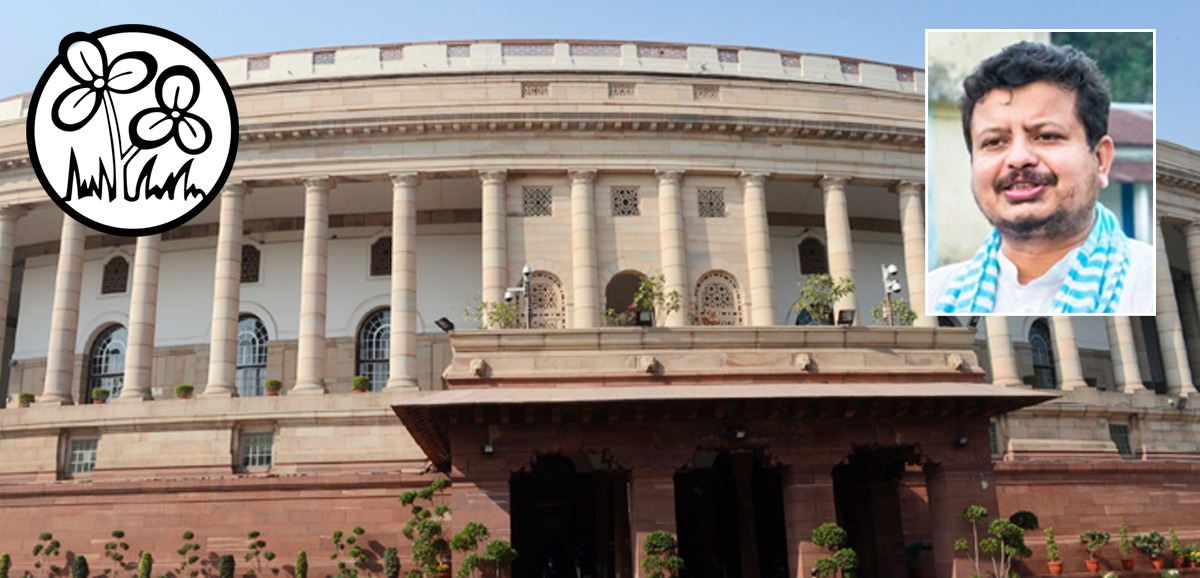
“ Sir. first of all, on behalf of my party, the All India Trinamool Congress, I pay my respects to the unfading memory of Rishi Bankim Chandra Chattopadhyay. Along with him, I also pay respect to the unfading memory of all those brave Indians, most of whom were brave Bengalis, who sang the victory song of life while chanting “Vande Mataram” on the gallows. Now, I don’t know, Sir, on whose advice but someone must have advised that there should be a discussion on “Vande Mataram.” The very slogan that was forbidden in the parliamentary bulletin is now being discussed in Parliament. Perhaps the person who gave this advice thought that discussing “Vande Mataram” or playing the “Vande Mataram card” would make it possible to conquer Bengal, that it would aid in winning Bengal. The discussion is happening, and the timing of the discussion points in that direction. But I want to say this, Sir, there is no place for divisive politics in Bengal and because of that, the BJP has no spiritual, cultural or intellectual connection with Bengal. This is the absolute truth. I will not go into history; Shri Jairam Ramesh has spoken in detail, and many others before him have spoken in detail. I will only say that in 1885, when Rishi Bankim was still alive, the poet of the world, Rabindranath Tagore, composed the tune for this song in 1885, in Raga Desh Raagini. Bankim was so mesmerized by the first seven lines that they were included in the third edition of Anandamath — the tune composed by Rabindranath… those seven lines… In 1896, at the Calcutta session of the National Congress, Rabindranath himself performed this song, the portion he had composed.” In 1905, Lord Curzon decided to divide Bengal. Anti-partition movement erupted, with Rabindranath Tagore as the nerve-centre. On 7th August, 1905, there was a Town Hall meeting. It was the first mass meeting of the anti-partition movement, and Tagore himself sung Vande Mataram; remember, Sir, only the first two stanzas! Bengal was boiling literally. On 16th October, 1905, Tagore spearheaded the famous anti-partition protest, where Hindus and Muslims tied rakhis to each other. Thunder of slogans of Vande Mataram and the famous protest song, penned by the polymath himself, took Calcutta and Bengal by storm. What was the song? “My Bengal of gold, I love you. Forever your skies, your air set my heart in tune as if it were a flute. My Bengal of gold, I love you” Recently, Sir, this has become the national anthem of Bangladesh. After the 1971 Bangladesh Liberation War, it became their national anthem. Sir, a sedition case has been filed for the crime of singing this song. The song that Rabi Thakur (Tagore) sang in 1905 to ignite the fire of the Anti-Partition movement, for the crime of singing that very song, Sir, we have no national language. Our country has no single national language; all languages are supposed to have equal status. But Bangladesh has a State language. It is the language of Rabindranath, the language of Bankim, the language of Nazrul, the language of Jibanananda, it is the language of us all. Sir, I am speaking in Bengali; I am delivering my speech in Bengali. Does that mean that I too will be branded as a Bangladeshi? Will it be said, Sir, that I am a Bangladeshi? Now, naturally, it is not just that one song. Rabindranath is a true polymath; he was a true polymath. Rabindranath wrote multiple songs at that time: “May the soil of Bengal, the water of Bengal, the air of Bengal, the fruit of Bengal be blessed, O Lord.” Our State’s hon. Chief Minister, mass leader Mamata Banerjee, has recognized this song as our State Anthem. It was written during this time. Rabindranath wrote, “If no one answers your call, then walk alone” during this time. It was during this time he wrote, “O my country’s soil, I bow my head to you… in you the mother of the world has spread her anchal.” These were written then, Sir. These are in history. Now, history… as we are discussing history, Sir, while discussing history, I naturally want to discuss what happened in the other House, Lok Sabha, when the hon. Prime Minister of the country was speaking, I suddenly heard mention of “Master.” Now, “Master” can mean a tailormaster too. We Bengalis know only one “Master”-‘Master da’ Surya Sen. Rabindranath was a true polymath. Master Da Surya Sen was the hero of Chittagong armoury raid. Master Da Surya Sen along with Tarakeswar Dastidar were the only two revolutionaries in India whose bodies were not given back to their relatives. They were boarded onto a ship and dumped into the Bay of Bengal because the dead Master Da was more dangerous than the living one. That “Master da” is being called just “Master”? Sir, will Bengalis listen to this? Will Bengalis accept that Master da is being called “Master”? Sir, I want to mention here that a BJP MP recently said that Jana Gana Mana was allegedly written for King George V. There can be no greater insult to the Poet Guru (Tagore) than this. The Poet Guru sang this song at the National Congress session in 1911. The choir of the Brahmo Samaj, led by Sarala Devi Chaudhurani, sang that song. Rabindranath himself was present. The future Prime Minister of the country, Pandit Nehru, was also present there. From that very day, the discussion began that the first stanza of this song would be our National Anthem. On January 24, 1950, our country’s Constituent Assembly made the first stanza of Jana Gana Mana Adhinayaka Jaya He, Bharat Bhagya Bidhata our National Anthem. To those who say… has anyone condemned it? Has any BJP leader condemned the claim that it was written for King George V? Look at the fourth stanza, Sir. In the fourth stanza, it says: “Through the thickest darkness of the night, in a land struck by sickness and unconsciousness / Your unwavering auspicious gaze remained awake, unblinking / In nightmares and terror, you protected us in your lap, O affectionate Mother.” Is George V a woman? Is George V a mother? These agents who spoke such things back then, attacking Rabindranath, the same continuity is going on, Sir. There was no electricity in Andamans. From Calcutta, batteries were sent to Andaman Cellular jail to lit up the houses and the rooms of the jailors. The jailors used those batteries to give electric shock to a revolutionary. Sir, the unparalleled great revolutionary, Ullaskar Dutta! No one else was given electric shocks. Those who were writing mercy petitions sitting in that jail were not given electric shocks. Electric shocks were given to the great revolutionary, Ullaskar Dutta. If that jail is to be named after anyone, it should only be in the name of Ullaskar Dutta. Revolutionaries like Ullaskar Dutta were not in the Cellular Jail of Andaman to write mercy petitions. When he used to become unconscious from electric shocks; a faint sound would come out of his mouth: “Vande Mataram, Vande Mataram.” If you have guts enough, target the man who suggested adopting the first two stanzas of Vande Mataram. It was not Nehru, it was not Netaji. In 1937, three days prior to the Session of the Congress, Gurudev told categorically for adoption of the first two stanzas. …(Time bell rings)… Sir, I will take half a minute. I crave your indulgence. If you have the courage, stand in Bengal before the 2026 elections and say that Rabindranath is responsible for the partition of the country. If you have the courage, stand and say it, and then contest the election. 10 crore Bengalis will teach you the meaning of “Vande Mataram.” Rishi Bankim Chandra does not sit and sip tea with you at a tea stall. He does not drink tea with you at a tea stall; he is not your friend that you will call Bankim Chandra “Bankim da.” Offer an unconditional apology. This is our demand, the demand of the All India Trinamool Congress, the demand of the entire Bengal including Mamata Banerjee and Abhishek Banerjee-unconditional apology. Jai Hind Vande Mataram. Jai Bangla.