February 10, 2026
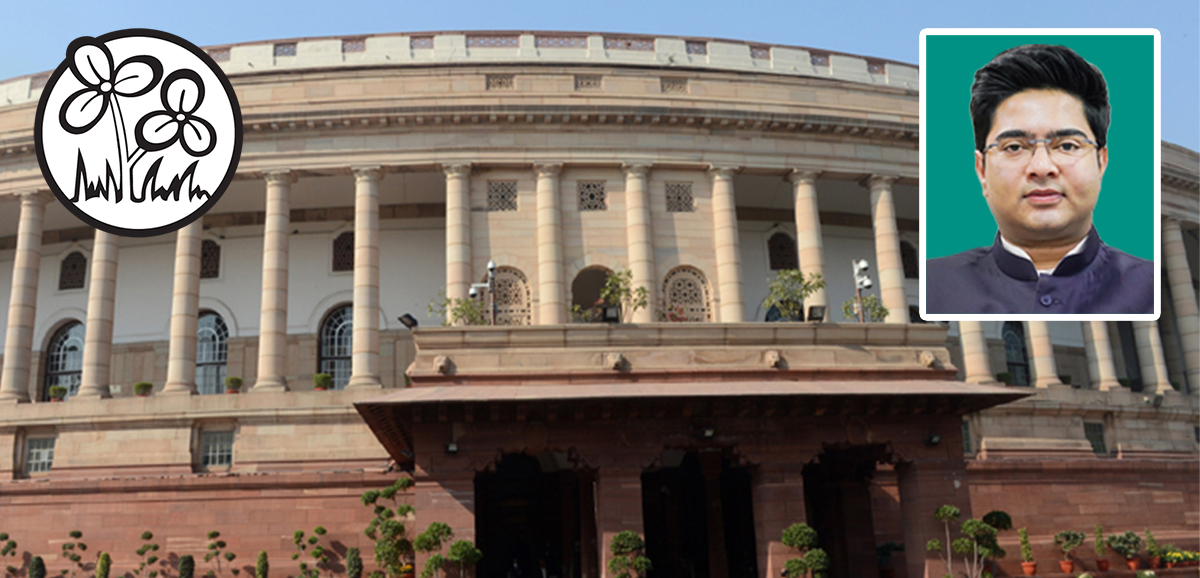
Honourable National General Secretary, Shri Abhishek Banerjee’s speech on the Union Budget for 2026-27 in Lok Sabha
Thank you, Sir, for giving me the opportunity to speak on the Union Budget. Sir, I rise here today, not merely as a Member of the Opposition, but as a voice of a billion Indians, who were promised “achhe din”, and who today struggle to survive under the weight of soaring costs. This Union Budget was presented on Maghi Purnima, a day which is ideally meant for clarity, renewal of purpose and moral responsibility. Yet, this Budget offers none of these. This Budget does not heal the economy, rather it curates headlines. It speaks loudly in slogans but softly in solutions. Sir, this is a Budget that rewards those who can avoid taxes through privilege and punishes those who pay them honestly through compulsion. With all due respect to the hon. Finance Minister, I think the hon. Finance Minister is appearing to practise the Robin Hood model in reverse. She drains the poor through taxation and inflation while rewarding the rich with concessions and privileges. Sir, even a cup of tea today comes with GST. But relief for the common man comes with conditions, clauses, terms and regulations. This is not a simple tax regime; it is a maze where only the powerful knows the exit and the honest taxpayer keeps paying the entry fee. Sir, Akhilesh ji was speaking before me. He was saying, “यू.पी. के तलए क्या तमला है, मंइस बजट मंदखना चाह रहा था।” े सर, फाइनंस तमतनस्टर की स्पीच 85 तमनट्स की थी। Bengal was not even mentioned once. Even the Freight Corridor from Dankuni referred in this very Budget was originally announced in 2009 by the then Railway Minister Ms. Mamata Banerjee, who is now the Chief Minister of West Bengal. The Constitution promises equality among the States, but this Government practices preference. Allies are funded, while the opponents are starved. Sir, this is a not a model of cooperative federalism. This is a model of subscription-based federalism. The Budget and the manner in which the Government chooses to function, forces us to confront a truth that we as citizens have been avoiding for too long. Sir, in November 2021, on a stage, thousands of miles away, at the Kennedy Centre, Vir Das a young stand-up comedian from India spoke of two Indias. Many laughed and some were offended. Few paused to listen but what he offered was not comedy. It was a warning, a prophecy, a mirror held up to a nation standing at the edge of its own contradictions because I, too, come from two India. I come from an India which proclaims Ek Bharat Shreshtha Bharat. I also come from an India where mother tongue becomes a marker of suspicion, where speaking Bengali makes you a Bangladeshi and eating fish makes you a Mughal. Sir, I come from a part of India that gave birth to revolutionaries and wrote courage in blood. I also represent an India where saying “joy Bangla” or singing “amar sonar Bangla” is enough to strip you and brand you a labelled “ghuspaithiya”. Sir, I come from an India that thunders “Sabka Saath, Sabka Vikas” from every podium and I also come from an India where West Bengal’s rightful dues to the tune of Rs. 1,96,000 crore remain frozen in cold bureaucratic silence. Sir, what is withheld is not just money. What is withheld is dignity. What is withheld is constitutional promise that every Indian, every State stands equal before the Union. This is not governance or federalism. This is a message that you stand in line or you will be made to pay the price. And that is the tragedy of our time. India has two faces, but that one India is being asked to kneel before the other is the truth that we are all facing today. I come from an India where the Finance Minister proudly declares, with absolute confidence, that India is the fastest growing economy in the world, and I come from another India where Bengal, after contributing Rs. 6.5 lakh crore in taxes in just last seven years, is systematically denied its rightful share. Sir, despite repeated requests and appeals, we have been denied employment under MGNREGA, housing under PM Awas Yojana, road connectivity under Gram Sadak Yojana, and even basic drinking water under the Jal Jeevan Mission is being stopped. I come from an India that boasts of ‘maximum governance, minimum Government’, and I also come from an India where governance means abandonment, where the poorest are forced to fight for roti, kapda aur makan; where wages are held hostage; where houses are sanctioned on paper but erased in practice; and where even drinking water becomes a bargaining chip in a political vendetta. I come from an India where farmers are stopped at the national capital with nail embedded in the roads, with concrete barricades, and I also come from an India where terrorists can enter the national capital and carry out blast killing 50 innocent people. I come from an India where we are told, and I quote, “India’s borders are safe and they cannot be violated”. A promise that is made from the highest office. And I also come from an India where that promise lies in ruins. Terrorists cross our border, infiltrate heavily-guarded militarized zones like Pahalgam, and gun down 26 innocent civilians under broad daylight. Hon. Sir, all of these — the abandonment, the broken promises, the selective cruelty — are not random. They are not accidental. They flow from a single unmistakable principle of this Budget. This Budget is built on a single unmistakable principle, that is triple. A writer once said, there are three kinds of lies: lies, damned lies, and statistics. Modern India lives with three certainties: pressure that mounts, taxes that multiply, and trust that is betrayed. Today, India lives under triple pressure, triple taxation and triple betrayal. Triple! So, let me place before this august House my 10 principles of triple. सर, पहलेतट्रपल टैक्स ट्रैप है। एक आम इंसान को लगिा हैतक मं एक बार इनकम टैक्स देरहा हू। But I will explain to the Chair and share with this ं august House that how a common man is being taxed three times over — not ones, twice, but thrice. The first blow is the income tax. The salaried citizen pays tax even before the salary reaches his bank account. There is no escape, no negotiation, and no adjustment made for inflation. In today’s India, honesty does not pay, it costs. Number two is GST. From the first biscuit with the morning tea to a school notebook, from sugar and spices in the kitchen to the electricity bills, from hospital expenses to medical expenses, from soap in the bathroom to the software at work, indirect taxes follows everywhere. जहां सरकार की वेल्फेयर स्कीम्स नहं पहुचिी ह ं ं, वहां भी जीएसटी पहुच जािी ह ं ै। The Government celebrates record GST revenue. But this number does not reflect growth or prosperity. It reflects a system squeezing revenue from consumption, often from necessity not choice. The third tax is inflation — the most silent tax of all. The tax that rises without permission and collects without responsibility. It is a slow leak in the common man’s wallet. For the middle-class, inflation feels like the salary comes on time, but it does not last the month. The same grocery list costs more, the same school fees feel heavier and the same electricity bill shocks more than even before. Nothing extra is being bought, yet money disappears faster. It quietly eats into savings meant for children’s education, family travel, medical emergency or old age. Sir, I come from an India that proudly calls itself a ‘Vishwaguru’. I also come from an India that is teaching the world how to extract triple tax out of a single citizen. Now, I come to my triple number two, triple pain of proving your existence. Let us be honest. Voting today is no longer considered enough. Having one’s name on the electoral rolls for decades is no longer enough. Even service to the nation is no longer enough. You may be a decorated soldier, a Nobel laureate, a sitting High Court Justice, or even a Member of this august House, and still you have been asked to prove that you belong to this country. This strikes the heart of Article 326 of the Constitution, which guarantees adult citizens the Right to Vote. In Bengal alone, 150 lives have been lost in the last couple of months, and nearly one crore people are today being treated as suspects. If electoral rolls are so unreliable that every citizen must continually reprove their legitimacy, then by that same logic, the legitimacy of this very House, formed on the basis of this very electoral rolls, is itself questionable. Now, I come to my triple number three, and I will talk of three betrayals. The first betrayal is this. Where the global crude oil prices crash, Indian citizen sees no benefit. Instead, the common man is generally offered ethanol mixed petrol at a premium, paying extra for a policy experiment he neither demanded nor benefits from. The second betrayal is, the Government boasts of bullet trains, which Akhilesh ji has also mentioned. While fancy trains make the headlines, only four per cent of the network is safeguarded with Kavach, leaving ordinary travellers exposed to risk. The third betrayal is this. The ordinary Indian does not ask for any miracle, they ask for clean air to breathe, clean water to drink, safe roads to return home, and affordable healthcare while life falters. Even these simple hopes remain uncertain. An ordinary citizen pays income tax to buy a vehicle, or for example, an ordinary citizen pays income tax to earn, a road tax to buy a vehicle, and toll tax to drive it on the road, often broken, unsafe, and unfinished. There are three payments on one journey. अगर एक इंसान इनकम टैक्स देरहा है, िो एक गाड़ी को सड़क पर चलानेके तलए उसेिीन बार टैक्स दना पड़िा ह े ै, तजसमंएक इनकम टैक्स, दूसरा रोड टैक्स और िीसरा टोल टैक्स है। That is why, I say three betrayals. Now, I will come to triple four, triple bonanzas for the rich. This Budget reveals a clear pattern, first, a triple bonanza for the elites, and a triple lock on the poor. The top 10 per cent of this country now acquire 57 per cent of nation’s income, and 65 per cent of its wealth, while the bottom half survives on just 6.4 per cent. In this economy, money earns money, but survival earns nothing. Second, if you look at taxation and support, foreign cloud giants are handed tax holidays, while Indian MSMEs, the very backbone of employment, are left empty handed. Relief exists on paper, but in actual distress exists on the ground. Third, corporate India gets red carpet, easier property rules, wider equity access for NRIs and massive infrastructure promises, but the result of these Government policies is not competition, it is concentration. Oligopolies flourish, entry barriers rise, and ordinary entrepreneurs are kept outside the gate, watching cronies grow richer with the Union’s support. Sir, I come from an India where wealth is applauded as a virtue and I also come from an India where survival itself is treated as ambition. I come from an India where policy quietly opens gates for the powerful, and I also come from an India that stands outside those gates with folded hands, bent backs, heavy hearts, and raised eyes, hoping that one day these gates will open for them too. Now I come to farmers. This Budget completes a cycle of betrayal. Every day, nearly 30 farmers die by suicide not because they failed, but because policy failed them. Five years after the historic farmers’ movement, in which 700 lives were lost, the Union government has still refused to legalise MSP. Promises were made at protest sites; assurances were echoed in Parliament, but delivery never followed. Now, adding salt to injury, the Government has announced a trade deal with the United States that will open Indian markets to heavily subsidised American farm produce. This deal may benefit American farmers, but it will depress prices, destroy competitiveness, and further marginalise Indian farmers who already struggle without MSP protection. This is not a trade policy. This is an abandonment of our Annadata. Sir, I have a tweet right in front of me which I wish to place before you. Brooke Rollins, the Agricultural Secretary of the United States, stated this just five days ago, on the very day this trade deal was announced. She has cleared said: “New US–India deal will export more American farm products to India’s massive market. In 2024, America’s agricultural trade deficit with India stood at 1.3 billion U.S. dollars. India’s growing population is an important market for American agricultural products, and today’s deal will go a long way in reducing that deficit.” Sir, this is not my tweet. She clearly states: “Thank you to the President of the United States for once again delivering for our American farmers.” If the Government disagrees with this claim, where is the letter of disapproval? Where is the communication sent in protest against a tweet issued five days ago? अमरीका केएग्रीकल्चर सैक्रेट्री कह रहेहंतक इस डील सेअमरीका के तकसानं का फायदा है। इसतलए हम अमरीका के राष्ट्रपति का धन्यवाद करिेहै। The Indian Government has not written a single line in protest. Sir, now I come to the youth. The much-publicised PM Internship Scheme was allocated over Rs.10,800 crore, yet less than five per cent of the amount has been utilised. Similarly, the PM Young Achievers Scholarship, meant to uplift talented students from marginalized backgrounds, saw 31 per cent of its funds go unused in the financial year 2026. Sir, if I speak of women, more than 86 women are raped every day in this country – a figure that reflects systemic collapse, not isolated crime. The West Bengal Government exercised its constitutional authority and passed the Aparajita Woman and Child Bill (West Bengal Criminal Laws and Amendment) Bill, a stringent anti-rape law providing the strongest deterrence against crimes against women. The Bill was duly sent to the Union through the Governor 18 to 19 months ago. For one and a half years, it has remained pending without any decision. When a democratically passed law meant to strengthen protection is left in limbo, it reflects a lack of intent. This reminds me that I come from an India that promises to double farmers’ income, and I also come from an India where 1,11,174 farmers and agricultural labourers – our brothers and sisters – have been forced to commit suicide. I come from an India which launched ‘Beti Bachao, Beti Padhao’ and I come from another India where every 16 minutes a rape or a crime against women is reported. Sir, now I come to three cracks in the Constitutions. First, hatred has now been normalized. It has moved from margin to the mainstream. If I talk about cases registered for promoting enmity between religious and social groups, the number of cases has doubled between 2021 and 2023 and this rise did not happen in silence. It happened alongside political speeches, public rallies and calculated dog whistles. When hate goes unpunished, it spreads. When it spreads, minorities pay the price. Second, hate is no longer whispered. It has become a broadcast. So, our country has documented more than 1,300 hate speeches in a single year. When such volume of hate fills public space and the Government refuses to act decisively and swiftly, then the message is clear; intimidation is tolerated, and silence is the Union’s policy. Third, the education empowerment scheme under the Ministry of Minority Affairs has just used eight per cent of its total funds while the 35 per cent of the Ministry’s allocation, 27 per cent under Tribal Affairs and 28 per cent under Scheduled Tribes, remain unutilized. Even scholarship schemes like Maulana Azad National Fellowship, the Pre-matric Scholarship and Padho Pradesh have been hollowed out. Now I come to triple seven, which is the triple power grab. Over the last decade, the Government has treated institutions as the Government’s own personal property. So, the Parliament is silenced, debates are curtailed, scrutiny is abandoned and even the Deputy Speaker’s post is kept vacant because dissent is inconvenient. Sir, investigating agencies no longer investigate; they intimidate, chasing the Opposition with raids and arrests while convictions become negligible. As independent institutions weaken, public institutions are put on the auction block. Air India, BPCL, the Shipping Corporation of India, built by generations with public money, are being sold like distressed assets hastily without any sort of accountability. Sir, this is described as a reform, but it is actually a managed handover. When institutions are bent to serve power and national assets are reduced to headlines and handovers, the Constitution is not broken in protest, it is torn apart. Sir, I come from an India where the hon. Prime Minister says, ‘Na Khaunga, Na Khaane Doonga.’ I also come from an India where questioning the washing machine that gave reprieve to 23 of the 25 leaders who joined the BJP makes you the most corrupt one. Sir, now I come to triple jumla on finances, on agriculture. So, the Budget waxes eloquent about coconut, cocoa, cashew, sandalwood, fisheries and AI advisories but remain silent on MSP assurances, procurement expansion. There is no price stabilization fund, no diesel support, no fertilizer relief and no electrical subsidy. This is diversification without security and it leaves the majority of Indian farmers trapped in distress. Sir, even the PM Kisan Scheme has been stuck at Rs.6,000 since December 2018 despite soaring input costs and record diesel prices. Sir, in actual, if we see in real terms, the farmers are earning less each year. A rupee in 2018 is not a rupee in 2026 in value. Sir, if I speak of health care, the Government spends less than 0.26 per cent of the GDP and they might have questions on my source of information. If the need be, I will place all the sources on the Table by 8 p.m. tonight. The Government spends 0.26 per cent of GDP on public health even today. The national health policy promised a spend of 2.5 per cent of GDP. What we get instead is postponement, excuses and under-allocation. In a country where illness is still the fastest road to poverty, this Budget chooses flyover over first aid, optics over oxygen and announcement over actual care. Sir, if I speak of infrastructure, the Smart City Mission promised transformation in one hundred cities with over Rs.2 lakh crore. Yet, a decade later, what we have is half-dug roads and half-built homes. Instead of finishing the job, this Budget announces new economic reasons. Sir, under the Jal Jeevan Mission, funds were cut by 74 per cent, forcing the States to pick up the Bill. In higher education, an amount of Rs. 55000 crore is spent on management, but an amount of Rs. 2.68 crore on infrastructure is not enough even to build a world-class lab. Sir, now I come to my triple nine, the triple truth trap. What I mean by the truth is that the accountability of the Governments primarily rests on three pillars. One is the RTI Act, but when I speak of transparency, it diluted the RTI Act by expanding personal information as a ground for refusal. Sir, if you speak of PM Cares, the PMO claims that it lies outside the purview of RTI because it is a private fund. A fund that is created by a public authority in a public office with the money of the people is being claimed as a private fund. There is no accountability. Sir, the data of NFHS and NCRB has been frozen. It is because welfare still runs on Census 2011. If I am to summarise the Budget from the perspective of three stalwarts, what is the moral verdict of the Budget? If we have to look at the it from the perspective of Dr. Ambedkar, Gandhi ji and Swami Vivekananda, Dr. Ambedkar warned us that democracy is not just institution, it is a constitutional morality; Gandhi ji taught us that economics divorced from ethics is violence; and Swami Vivekananda reminded us that a nation cannot rise by crushing the weakest. This Budget violates all three. Sir, in today’s India, tax does not follow income; it follows life. आज के भारत मेंटैक्स कमेाई के पीछे नहीं, जजदगी क ं े पीछे चलती हीै। I will give you a small example. A baby is born, his milk and diapers are taxed. He grows, his education is taxed. He studies, his books, pencil and mobile data are taxed. He starts earning, his income is taxed. He saves for future, his savings are taxed. He spends to survive, his survival is taxed. He goes to work, his fuel is taxed. He falls sick, his illness is taxed. He grows old, his pension and healthcare are also taxed. And, hon. Chairperson, even after his death, the family still pays the tax. बच्चा पैदा हीोता हीै, तो दूध और डायपर पर टैक्स। पढ़ाई शरु हीोती ही ु ै, तो जशक्षा पर टैक्स। जकताबं, नोटबक, प ु ेन, पंजसल, मेोबाइल डेटा,सब कुछ पर टैक्स। जब कमेाई शरु हीोती ही ु ै, तो इनकमे पर टैक्स। अगर बचत करता हीै, तो उस पर टैक्स। जीनेके जलए खचच करता हीै, तो उस खचचपर टैक्स। कामे पर जाता हीै, तो पेट्रोल-डीजल पर टैक्स। बीमेार पड़ता हीै, तो इलाज और दवाई पर टैक्स। बढ़ापा आता ही ु ै, तो पंशन और इलाज पर टैक्स और मेौत के बाद शोक सभा में अगरबत्ती जलाने के जलए भी पररवार को टैक्स दना पड़ता ही े ै। This summarises the Budget. Sir, I am addressing the Chair. I am sure, the hon. Finance Minister will have a reply ready. When she will be given the opportunity to speak, she can quote me and If I am misleading the House, she can take my name and then place her arguments. Sir, from a baby’s first milk to a citizen’s final farewell, this Government taxes life at every step. जन्मे सेलेकर अजतमे स ं स्कार तक, हीर कदमे पर ट ं ैक्स लगाया जाता हीै। सर, यही ररफॉमेचनहीं हीै, यही लाइफ टाइमे टैक्स ट्रैप हीै। Sir, now I come to my triple ten. मेंने9 जट्रपल की बात की अब में10वां जट्रपल करनेजा रहीा हीू। I will end with three dates. These are three moments of history- ं 2016, 2021, and 2024 – three elections, three verdicts, and three decisive defeats for the BJP in West Bengal. After this triple defeat, the fourth one is no longer a warning; it is approaching. सर, में ज्यादा घमेाऊु ंगा नहीं, let me come straight to the point. The Government wants to punish Bengal. Let them proceed. We would not bow. You want to freeze our funds; we will persist. मेंपरजसस्ट क्यं कही रहीा हीू,क्यंजक पीएमे ं आवास सेलेकर, सड़क, मेनरगा, ब े गाल क ं े सारेपैसेजपछलेपाच वर्षों स ं ेइस सरकार नेरोक कर रखा हीै। प्रधानमेत्री जी न ं े‘आत्मेजनभचर भारत’ की बात की हीै। ‘स्वजनभचर बगाल’ क्या हीोता ही ं ै,यही हीमेनेकामे करके जदखाया हीै। If you want to punish Bengal, you can proceed; we would not bow. If you want to freeze our funds, we will persist. If you want to profile and persecute our youth, we will protect them. If you want to starve our schemes, we will sustain our people. Bengal’s spine was never bent by surrender, nor was it softened by sermons of hate. It is forced in struggle, tempered in sacrifice, and is not for sale. Go ahead and send your audits, we will answer them. If you unleash your agencies, we will confront them. If you delay our clearances, we will chronicle every stolen day. But remember, files can be frozen, funds can be stalled, voices can be suppressed but memories cannot be erased. When the people rise and the ballot breaks the silence, we will settle the final account. You will wear the mask of the Union, we will raise the mirror of the people. When truth looks back, power will bend and let us see who will blink first. This reminds me again that I come from an India that celebrates labour as the backbone of the economy, the hands that build our highways, factories, ports, cities, and this Parliament. But I also represent an India where that very labour, when it travels from Bengal, is no longer seen as a labour, but he is seen as a suspect, punished for the language he speaks. I come from an India where the North-East is proudly called ‘ashtalakshmi’ and I also come from an India where Manipur bled for 864 days and the Prime Minister found no time to visit Manipur. I come from an India that derives its vocabulary from Ishwar Chandra Vidyasagar and I also come from an India where Vidyasagar’s bust was vandalised by the ruling party at the Centre. I come from an India where we worship Maa Durga, the supreme shakti and I also come from an India where Maa Durga’s ancestry is questioned by BJP leaders. Sir, I really come from ‘two Indias’. Honestly, I am tired of explaining this to this House to which India I belong to because the truth is that they both exist and until and unless we acknowledge that the second one exists, we will never be able to claim the first one. Sir, Budgets can divide, politics can polarise, power can pretend, but there is something deeper than Budgets, older than Governments and stronger than fear, and that is the moral imagination of the people. When institutions weaken and language loses its faith, it is our literature, our culture, our shared memory which rises to remind the nation of who it is and who it must never cease to be. I finally return to the Constitution. When it opens or when we open the Constitution, it opens with the words ‘We the People of India’. It is not a ceremonial phrase but it is a declaration of sovereignty. It is a reminder that power flows upwards from the people, not the other way down; that the Governments may rule but the people remain the supreme. That sentence is not meant to be recited, it is meant to be lived. As long as people remember it, no fear can last, no injustice can endure and no republic can ever truly be taken away. Thus, today, I do not end with slogans; I end with conscience and I end with the voice of Bengal: * “This valley of death is not my country, This hangman’s cheering stage is not my country, This widespread crematorium is not my country, This blood-drenched slaughterhouse is not my country, I will revive my country.” Jai Hind! Jai Bangla!”